You're comparing three photographers. One quotes six hours, one quotes eight, one says "full day" and won't tell you what that means. Meanwhile someone in a wedding group is insisting you need ten hours "or you'll regret it," and someone else says four is plenty.
Here's the truth from someone who has been on the other side of 750+ weddings: there's no magic number. There's your number, and it comes from your timeline, not from a package name. Let me show you how to find it in about five minutes.
The Short Answer
- Around 6 hours works when your ceremony and reception are at the same venue, you're doing a first look, and getting ready is close by.
- Around 8 hours is where most couples land. It comfortably covers getting ready, the ceremony, family photos, portraits, and the big reception moments.
- Around 10 hours makes sense for two locations with travel between them, big families with lots of traditions, or a ceremony late in the day with a long party after.
For context, a 2025 survey of 138 U.S. wedding photographers found a typical package includes about ten hours. That doesn't mean you need ten. It means the industry has drifted toward selling "more," and more isn't automatically better.
How to Find Your Number (Do This With Your Timeline Open)
Write down three times:
- When you want me to start. Usually 60 to 90 minutes before you're dressed. That's enough for details, the last touches of hair and makeup, and the dress or suit going on. You don't need four hours of getting-ready photos. Nobody frames the photo of the curling iron.
- When your must-have moments end. For most couples that's after the first dance, toasts, parent dances and cake, plus 30 to 45 minutes of open dancing once the floor is full.
- Any travel in between. Church to venue, hotel to venue, a portrait location across town. Count it honestly, plus a buffer.
The span between the first and second time, travel included, is your coverage. Round up to the nearest hour, not the nearest package.
A Few Real-World Shapes
These are the patterns I see again and again in New Jersey, New York and Pennsylvania:
Same venue, first look, Saturday evening ceremony. Start at 1:00, first look at 3:00, ceremony at 5:00, dinner and dances by 7:30, dancing until 8:00. That's seven hours, and six is doable if you start a little later. This is exactly why my six-hour collection exists.
Church ceremony, reception elsewhere. Getting ready, a 2:00 ceremony, travel, portraits at a park or the venue, cocktail hour, reception. The travel and the gap between ceremony and reception eat time fast. Plan on eight, sometimes nine.
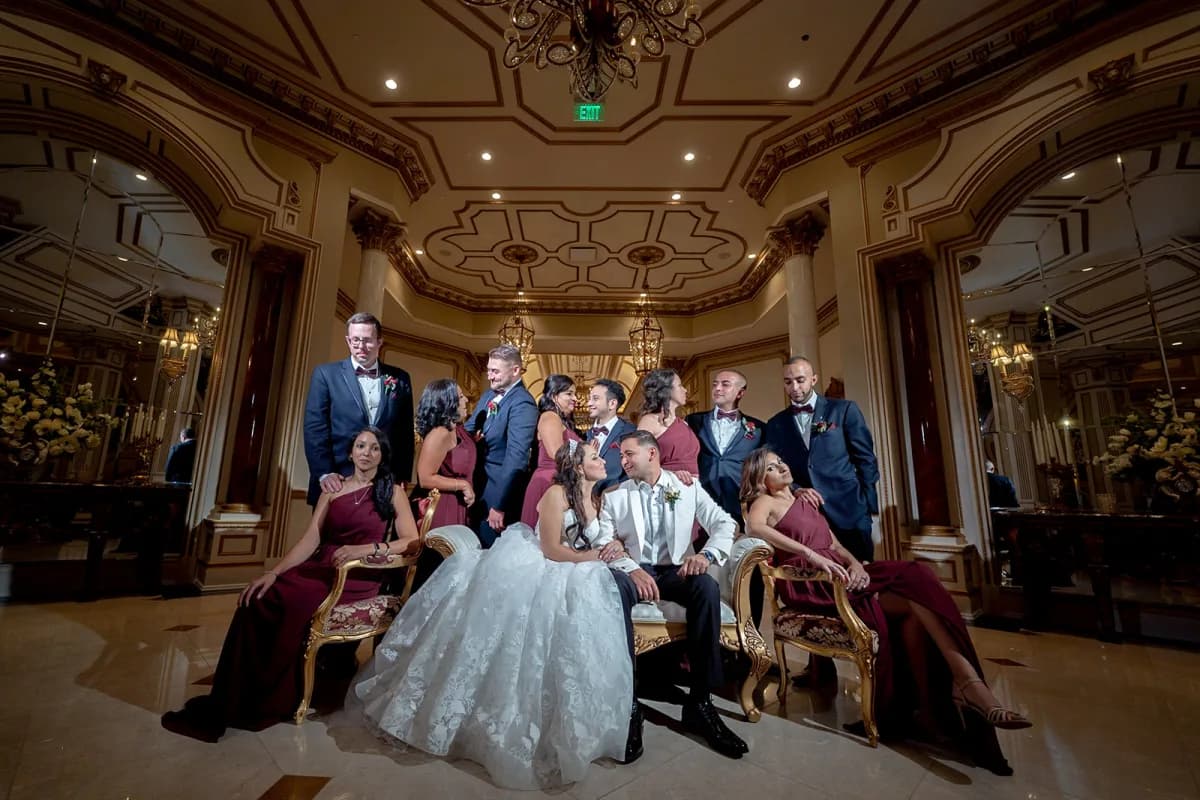
Big family, big traditions. Two getting-ready locations, a long ceremony with cultural rituals, many family groupings, a grand entrance, a packed dance floor that peaks late. Ten hours isn't a luxury here. It's the difference between "we got it" and "we missed the moment your grandmother danced."
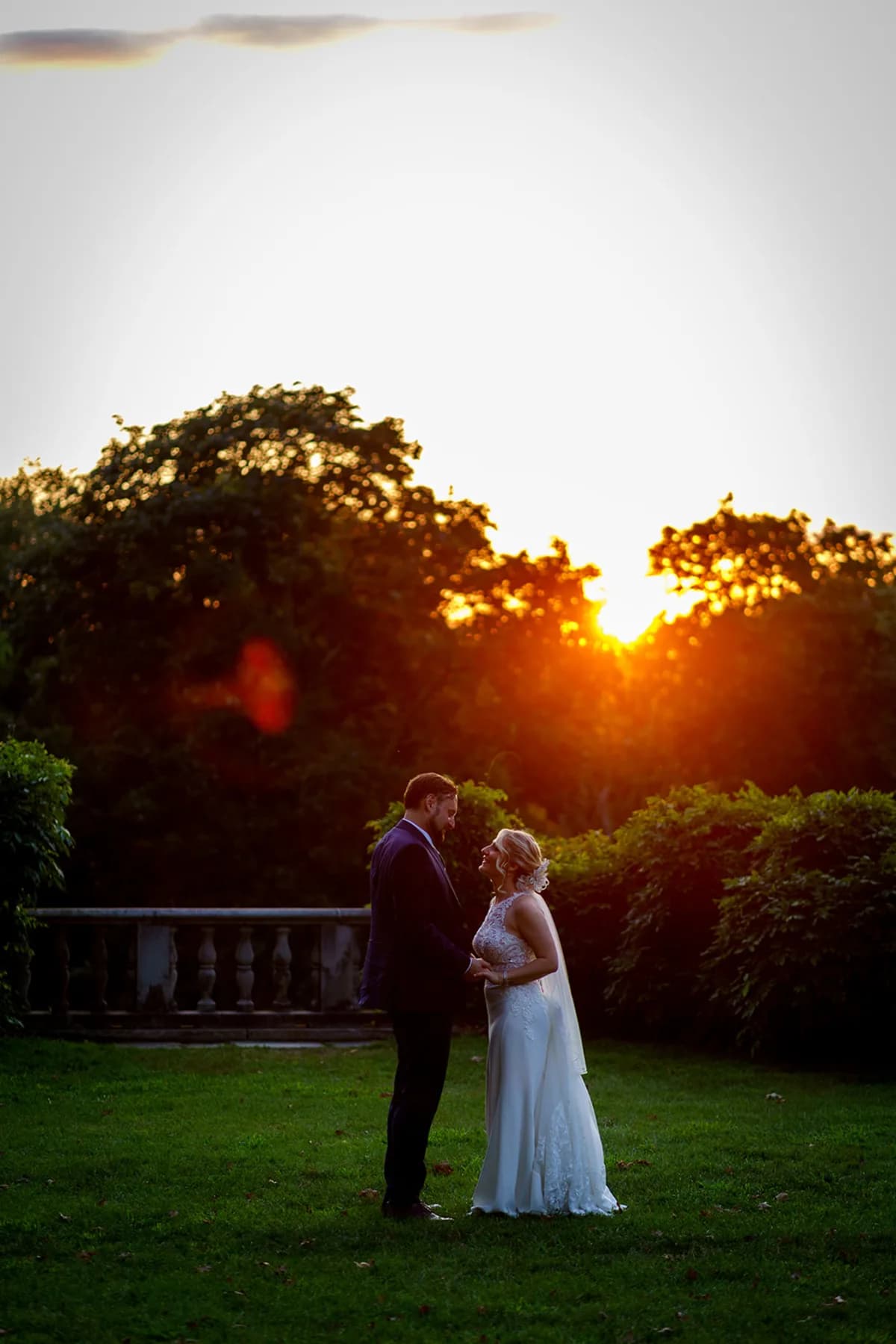
An evening wedding in summer. Golden hour lands during dinner. If coverage ends at 9:00 and sunset is at 8:30, we can step out for 15 minutes while guests eat and you get the most flattering light of the day. Check your date in the golden hour planner.
Where Hours Quietly Get Wasted
I'd rather you spend money where it shows up in your photos. These are the hours that rarely do:
- The first hour of hair and makeup. It's mostly people in robes looking at phones.
- Dinner service. I photograph the room and the toasts, then step away. Nobody wants photos of themselves mid-bite.
- The last hour of the party. By then the dance floor photos look like the dance floor photos from an hour ago, just sweatier. Unless you're planning a grand exit, ending coverage after the dance floor hits its peak is usually the smart call.
When More Time Is Absolutely Worth It
On the other hand, I'll always tell a couple to add time when:
- Your ceremony and reception are far apart. Rushing portraits because the clock is running is the most common regret I hear about.
- You're planning a sparkler or grand exit at the very end. If that's a must-have, coverage has to reach it. More on making exits work.
- Your family is large and close. The extra time protects the photos you'll care about in twenty years.
- You're skipping a first look. That pushes couple portraits and the wedding party after the ceremony, often into cocktail hour. A little more time keeps you from missing your own party. My honest take on first looks has the whole trade-off.
What About a Second Photographer?
Hours and people are two different levers. A second photographer doesn't make your day longer. They let two things happen at once: both of you getting ready in different places, the guests' reactions while I'm on you two at the altar, cocktail hour while we're doing portraits. If your day has a lot of "at the same time," that's often worth more than an extra hour. I go deeper in whether a second photographer is worth it.
Don't Let Hours Become the Whole Decision
It's easy to compare quotes by hours because hours are the only number that looks the same on every pricing page. But eight hours with someone who plans the timeline with you, knows your venue and isn't afraid to quietly move things along will give you more than ten hours with someone who just shows up.
A few questions to ask instead:
- Will you help me build the timeline, or do I bring it to you?
- What happens if the day runs long? Can we add time on the spot?
- Who is actually photographing my wedding?
For the record, my answers: yes, I build the timeline with every couple; extra hours are published on my pricing page, so there are no surprises if you need more; and I photograph every wedding myself.
Quick Questions
Is 6 hours enough for a wedding?
Often, yes, if the ceremony and reception are at one venue and you do a first look. It gets tight with travel, a long ceremony, or big family photo lists.
Is 4 hours of wedding photography enough?
For a courthouse wedding, an elopement or a small dinner, it can be. For a traditional wedding with a reception, four hours usually means choosing between getting ready and the party.
Can I add hours later?
Usually, yes. Extra hours are a published add-on, and most couples finalize coverage once the timeline is set a couple of months out.
The Bottom Line
Don't buy hours. Buy the right moments. Open your timeline, find when your must-haves start and end, add travel, and you'll know your number.
If you'd like a second pair of eyes on it, send me your date and a rough timeline and I'll tell you honestly what I'd recommend, even if it's less than you expected. You can also build your day on my pricing page and see the total before we talk.