Every wedding planning website has a list of "questions to ask your wedding photographer." They all have roughly the same 25 questions. "How many weddings have you shot?" "What's your style?" "Do you shoot in RAW?" "Can I see a full gallery?"
These lists aren't wrong. They're just not very useful. Most of them are answerable by spending five minutes on the photographer's website, and the rest are so generic that any photographer with a pulse will give you a polished answer.
I've been on the receiving end of these consultations for 14 years. I know which questions separate the couples who make great hiring decisions from the ones who end up unhappy. And the difference isn't asking more questions — it's asking better ones.
Here are the ones that actually matter.
What Should I Ask a Wedding Photographer?
Ask to see full wedding galleries, what happens if they get sick, how many weddings they shoot per weekend, their turnaround time, whether they bring backup equipment, if a second photographer is included, and what their editing style looks like. These questions reveal more than any portfolio.
"What Happens If You Can't Make It to My Wedding?"
This is the most important question on this entire list, and almost nobody asks it.
Not "will you be there?" — every photographer says yes. The real question is: what's your plan when something goes wrong? Because in 14 years of wedding photography, I've seen things go wrong. Photographers get sick. Cars break down. Family emergencies happen. A photographer I know broke his wrist the week before a wedding.
What you want to hear: a specific, detailed answer. Not "don't worry, I'll be there." You want to hear something like: "I have a network of three photographers I've worked with who are on standby for emergency coverage. They know my style, they have the right equipment, and I have a formal agreement with them. If I physically cannot show up, one of them will be there with the same contract terms."
What you don't want to hear: "That's never happened to me." Great. It hasn't happened yet. What's the plan for when it does?
I've had to activate my backup plan twice in 14 years. Both times, the couple barely noticed the switch because the backup photographer was prepared, briefed on the timeline, and professional. That's what a real backup plan looks like.
"Can I See a Full Wedding Gallery, Not Just Your Portfolio?"
Every photographer's portfolio shows their 30 best photos. That's the point of a portfolio. It tells you their ceiling — the best they can produce under ideal conditions.
What it doesn't tell you is their floor. What do the "boring" parts look like? The ceremony with bad church lighting. The getting ready shots in a dim hotel room. The reception after midnight when everyone's sweaty and the DJ lights are green.
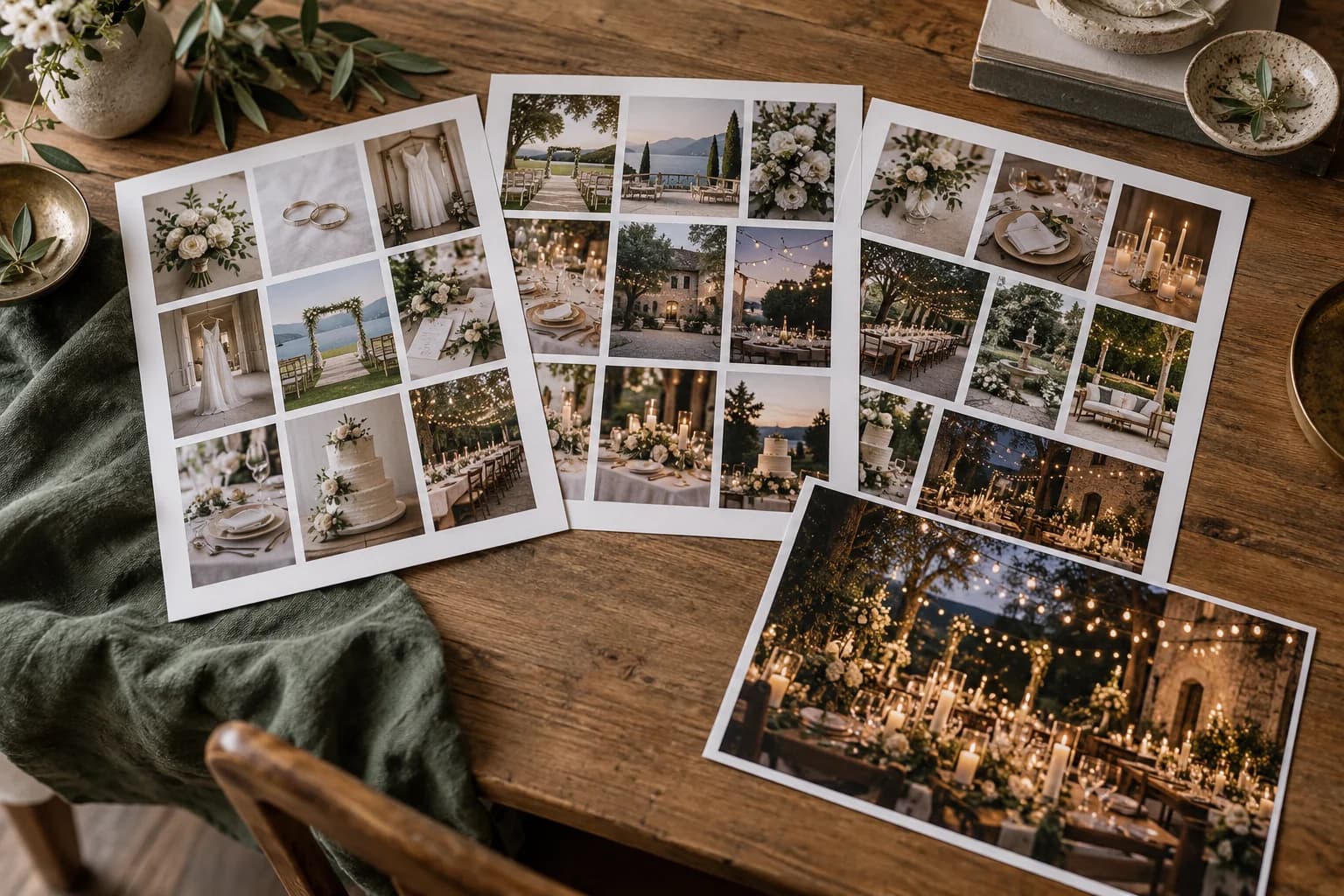
Ask to see a complete gallery from a wedding similar to yours — same venue style, same time of year, similar guest count. Look at all of it. The candids, the details, the reception dancing. Is the quality consistent throughout, or does it drop off after the couple portraits?
I send full galleries to every couple who asks. If a photographer won't show you a complete wedding, ask yourself why.
"What's Your Actual Editing Style, and Has It Changed?"
"Light and airy" and "dark and moody" are basically meaningless at this point. Every photographer claims a style. What matters is whether their editing is consistent across their work and whether it'll still look good in ten years.
Here's what to dig into:
"Will my photos look like what's on your Instagram right now?" Some photographers change their editing style every year to chase trends. Their 2023 work looks nothing like their 2021 work. That's fine for them, but it means the style you're booking today might not be the style you get in eight months.
"How heavily do you edit?" There's a spectrum from "I adjust exposure and white balance" to "I completely transform the color palette of every image." Neither is wrong, but you should know what you're getting. Heavily stylized edits can look dated fast. Think about the heavy orange-and-teal trend from five years ago, or the desaturated film look from before that. If your photos look like a trend, they'll eventually look like a past trend.
"Can I see work from three years ago alongside recent work?" If the style is wildly different, this photographer is a trend-chaser. Your 2025 wedding will look very 2025, which sounds fine until it's 2030.
My editing has evolved over 14 years, but the core approach has stayed consistent. I want your photos to look like the best version of what your eyes actually saw. Not a filter. Not a look. Just clean, natural, and real.
"What Does Your Turnaround Time Actually Look Like?"
The industry standard answer is somewhere between four and eight weeks. Some photographers say 4 weeks. Some say 12. What matters more than the quoted timeline is the real one.
"When was your last wedding delivery, and how long did it take?" This gives you real data, not a marketing answer.
"What's the longest a client has ever had to wait?" Every photographer has their worst-case story. Listen to how they tell it. Did they communicate proactively, or did the client have to chase them?
"Will you send sneak peeks, and when?" Most photographers release a handful of edited images within a few days of the wedding. This matters more than you think — you'll want something to post and share while the excitement is fresh. If they don't do sneak peeks, that's a yellow flag (not red, but yellow).
I deliver sneak peeks within 48 hours and full galleries within 4-6 weeks. But more importantly, I send progress updates so you never wonder what's going on. The post-wedding process should feel transparent, not like a black hole.
"How Do You Handle the Family Formal Photos?"
This question reveals more about a photographer's experience than almost anything else. Family formals — those posed combinations with parents, grandparents, siblings — are where chaos lives. The couple is tired, the family is scattered, and everyone has opinions about who should be in which photo.
"Do you work from a list?" The right answer is yes. I collect the family photo list before the wedding, organize it by efficiency (all combinations with grandma first, so she can sit down), and run through it systematically. A photographer who "figures it out on the fly" will take 45 minutes to get photos that should take 15.
"How long do family formals take you?" If they say less than 10 minutes for a standard family, they're either incredibly efficient or skipping combinations. If they say more than 30 minutes, they're either padding or disorganized. My target is 15-20 minutes for a standard family list of 10-12 combinations.
"What if family dynamics are complicated?" Divorced parents. Step-families. Family members who don't speak to each other. This is real life, and it happens at a huge percentage of weddings. An experienced photographer handles this seamlessly. Ask how.
"What Gear Do You Bring, and What's Your Backup?"
You don't need to be a camera nerd to ask this question. What you're really asking is: are you a professional who's prepared, or are you someone with one camera and a prayer?
What you want to hear: two camera bodies (minimum), multiple lenses, external flash, backup memory cards, backup batteries. If one camera dies — and cameras do die — the wedding doesn't stop.
What should concern you: a photographer who shows up with one camera body and no backup equipment. This is like a surgeon with one scalpel. Sure, it'll probably work. But "probably" isn't what you want on your wedding day.
I bring two camera bodies, four lenses, three flashes, a bag full of batteries and memory cards, and a backup of every critical piece of equipment. This isn't paranoia — it's professionalism. Gear fails. The question is whether you're prepared for it.
"What Happens to My Photos After Delivery?"
This one surprises people, but it matters.
"How long do you keep my images?" Some photographers archive client images forever. Some delete them after a year. Neither is inherently wrong, but you should know. If your hard drive crashes three years after the wedding and your photographer has already deleted the originals, that's a problem you want to know about in advance.
"Are the images backed up during the wedding?" Dual card slots — where the camera writes each image to two memory cards simultaneously — are the industry standard for professional wedding photography. If a photographer is shooting to a single card, one card failure means your photos are gone. This is non-negotiable in my opinion.
I shoot to dual cards, back up to an external drive the night of the wedding, and upload to cloud storage within 48 hours. Your images exist in at least three places before I start editing. After delivery, I archive everything for a minimum of three years.
Questions That Are Less Important Than You Think
I'm going to save you some time on your consultation calls.
"How many weddings have you shot?" Sounds important, isn't really. A photographer with 50 weddings and great work is better than one with 500 and mediocre work. Look at the portfolio, not the number.
"Do you shoot in RAW?" Every professional photographer shoots in RAW. This is like asking a chef if they use a knife. If you have to ask, they probably don't, and you probably shouldn't hire them.
"What's your shooting style — photojournalistic or traditional?" Almost every modern wedding photographer does both. The real question is the ratio, and that's better answered by looking at galleries than asking the question.
"Will you travel to my venue?" Almost every photographer will travel. Just ask about travel fees for venues outside their home area. Most NJ photographers cover the whole state without extra charges.
The One Question Nobody Asks (But Should)
"Can I talk to a recent client?"
Not a testimonial on your website — those are curated. An actual recent client you can email or call. Someone who can tell you what the experience was really like. How was communication leading up to the wedding? Were they easy to reach? Did they deliver on time? Were they pleasant to be around for eight hours?
You're hiring someone to spend 8-12 hours at the most emotionally charged event of your life. You're going to interact with them more than most of your guests. Personality fit matters as much as photography skill.
I give references to every couple who asks. And when those couples call my past clients, the thing they hear most often isn't about the photos (though those come up too). It's "he was so easy to work with." That matters. On a day when everything is a little stressful and a little overwhelming, having a photographer who's calm, prepared, and genuinely fun to have around makes a bigger difference than you'd expect.
The Bottom Line
The right wedding photographer for you isn't the one with the best answers to a generic checklist. It's the one whose work you love, whose personality you click with, and whose backup plans give you confidence that your wedding day is in professional hands.
Ask fewer questions. Ask better ones. And trust your gut.
Thinking about booking and want to ask me any of these questions? I'm an open book. Reach out for a consultation — no pressure, no sales pitch. Just an honest conversation about your wedding day.