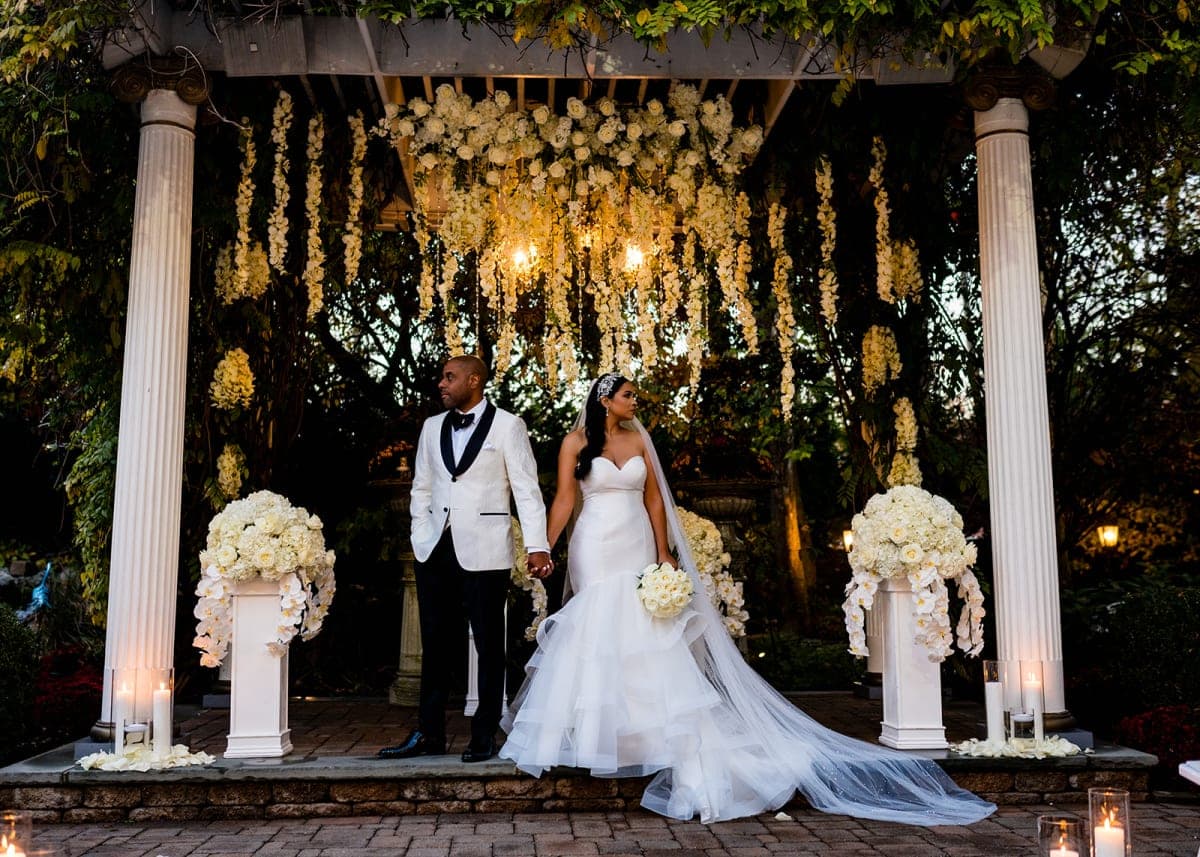
New Jersey might be the most interesting state in America to photograph weddings. And I don't say that because of the venues (though the venues are great). I say it because of the people.
Within a single month, I might shoot an Indian baraat with a horse and a dhol player, a Catholic mass with full communion, a Jewish ceremony under a chuppah, an Italian-American wedding with a cookie table that takes up an entire room, and a backyard wedding where the couple wrote every word of the ceremony themselves.
This is what 14 years of wedding photography in New Jersey teaches you: every single wedding is different, and the photographer who shows up without doing their homework is going to miss moments that matter.
Let me walk you through what I've learned.
Italian-American Weddings: The Tarantella and the Cookie Table
Northern New Jersey has one of the largest Italian-American populations in the country. I've photographed so many Italian-American weddings that I can now identify the tarantella by its opening notes, which is useful because that's my cue to get into position.
Moments your photographer needs to know about:
The tarantella (or Italian wedding dance) usually happens during the reception. The couple is in the center, surrounded by guests dancing in a circle. It's fast, it's chaotic, it's loud, and it's one of the most joyful things I've ever photographed. But here's the thing — it happens quickly. If your photographer doesn't know it's coming, they'll be sitting at the bar reviewing images on their camera when the music starts.
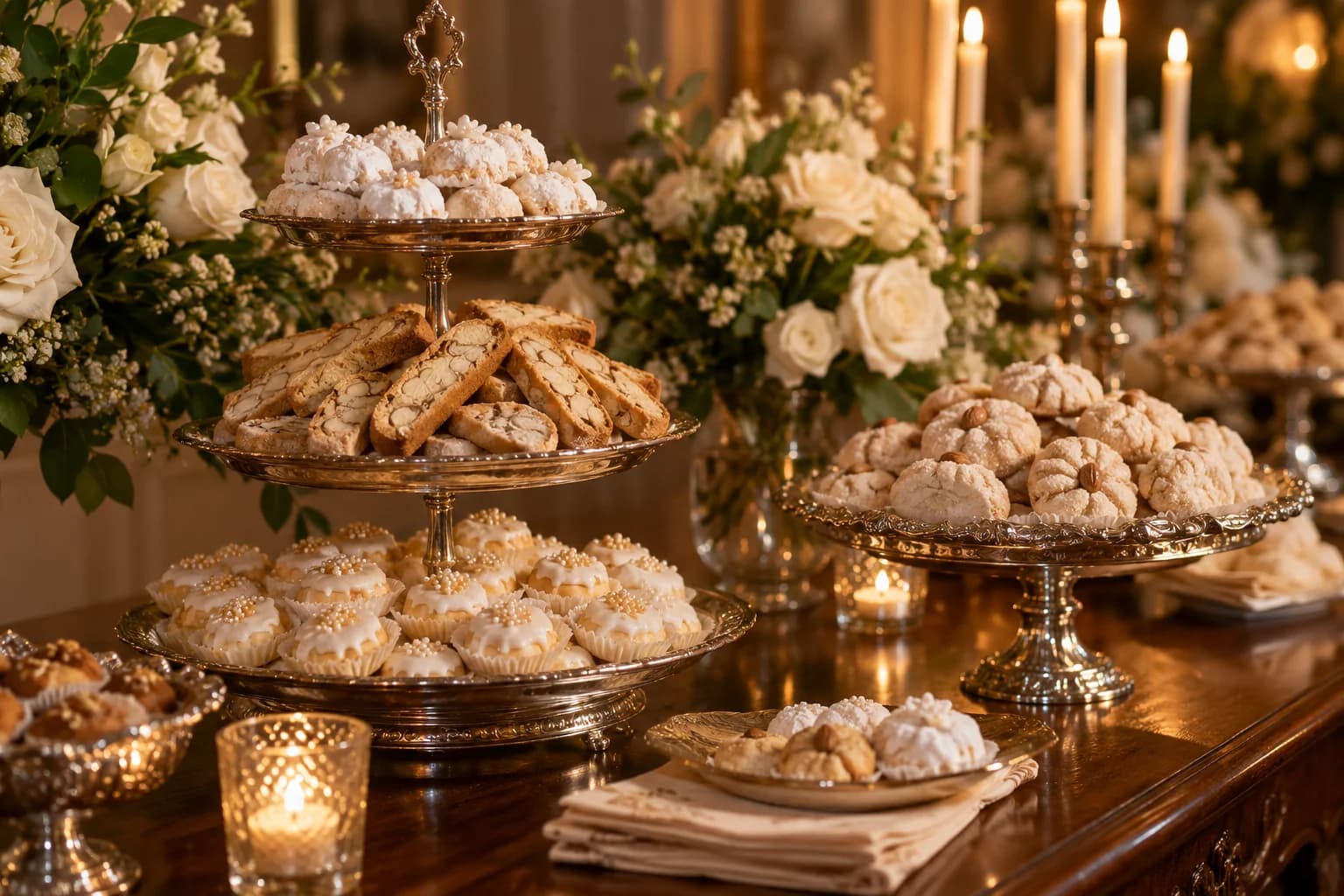
The cookie table is a huge deal in Italian and Italian-American families, especially in NJ and the greater Philly/Pittsburgh area. Extended family members bake dozens of varieties of Italian cookies and arrange them on a massive display table. I always photograph this early in the reception before guests demolish it. And I always, always photograph the nonnas standing proudly next to their contributions. Those are the photos that end up framed on mantlepieces.
The money dance (la busta) — guests pin money to the couple or stuff envelopes into a satin bag. Not exclusive to Italian weddings but very common at them. Photographically, this is about faces. The money isn't the story. The uncle handing over an envelope with a wink and a handshake — that's the story.
Jewish Ceremonies: More Than Breaking the Glass
I've photographed Conservative, Reform, Orthodox, and everything in between. Jewish ceremonies are photographically rich, but they require specific knowledge.
The ketubah signing happens before the ceremony and is one of the most intimate parts of the day. It's usually in a smaller room with immediate family and the rabbi. The light is often terrible (small rooms, overhead fluorescents), but the moment is beautiful. A good photographer scouted this room ahead of time and brought appropriate lighting.
The chuppah is the canopy under which the ceremony takes place. Photographically, it frames the couple perfectly — but it can also create awkward shadows depending on how it's constructed and where the sun is. I always check the chuppah setup during the ceremony rehearsal or ask the coordinator for details beforehand.
The seven blessings (sheva brachot) are read by honored guests. Each one is a moment — the reader's face, the couple's reaction, the parents watching. If you don't know there are seven, you might stop paying attention after two.
Breaking the glass. Everyone knows this one. The groom (or both partners) stomps on a glass wrapped in cloth. Everyone yells "Mazel tov!" This happens in about 0.8 seconds. Your photographer gets one chance. After 750+ weddings, my camera is pre-focused on the foot before the rabbi even says the words.
The hora. Chairs go up, couple goes up on the chairs, and everyone dances in circles. This is physically dangerous for the people on the chairs and photographically challenging because of the motion and the ceiling height. I shoot this from below and from the side. Never from above — that's where the ceiling fans are.
Indian Weddings: Multiple Days, Thousands of Moments
Indian weddings in New Jersey are some of the most spectacular events I've ever documented. They're also the most complex from a photography standpoint.
The baraat — the groom's arrival procession. In many NJ venues, this happens in the parking lot or a designated outdoor area. There's music (often a dhol player), dancing, and frequently a horse. Yes, a horse. The groom arrives on it. The energy is incredible, and the light is usually gorgeous because it happens in the late afternoon. I shoot this with a longer lens to compress the crowd and capture the energy.
The ceremony itself can run 60-90 minutes or longer, depending on the tradition (Hindu, Sikh, Muslim, and others all have distinct ceremonies). There are specific rituals — the mangal pheras (walking around the sacred fire), the sindoor, the garland exchange — and each one has a precise moment that needs to be captured. I study the specific ceremony order with the couple and their pandit/priest beforehand. Walking in blind is not an option.
The mehndi (henna party) often happens a day or two before the wedding. The detail shots of the henna itself are important, but the candid moments — the laughter, the family gathered, the intricate work being applied — those are the photos that make it into the album.
Outfit changes. Many Indian weddings involve multiple outfit changes, sometimes three or four in a single event. Each outfit is elaborate and meaningful. I coordinate with the couple on timing so we can do quick portrait sessions with each look.
My biggest piece of advice for couples planning an Indian wedding in New Jersey: make sure your photographer has done this before. Not "I'm open to learning" — actually done it. The pace, the rituals, the multi-day format, the lighting challenges (fire ceremonies in dimly lit mandaps) — it's a specific skill set. Ask for a full gallery from a previous Indian wedding, not just five portfolio images.
Latin American Traditions: The Lasso, the Coins, and the Crazy Hour
New Jersey's large Latin American community means I photograph traditions from Mexico, the Dominican Republic, Puerto Rico, Colombia, Ecuador, and beyond. Many of these traditions overlap, but each family puts their own spin on things.
El lazo (the wedding lasso) is a rope or rosary shaped in a figure-eight that's placed around the couple's shoulders during the ceremony. It symbolizes unity and is usually placed by the padrinos (godparents/sponsors). It's a beautiful, quiet moment. Photographically, I shoot tight — the hands placing the lasso, the couple's faces, the loop around their shoulders.
Las arras (the 13 coins) are blessed and exchanged between the couple during the ceremony. They represent Christ and the twelve apostles, or mutual trust and commitment depending on the tradition. The coins are tiny. This is a macro lens moment. The detail shot of the coins in cupped hands, plus the wider shot of the exchange — both matter.
La hora loca (the crazy hour) is increasingly common at NJ weddings with Latin American influences. Think: LED props, masks, maracas, glow sticks, hats, feather boas, dancers on stilts. It's absolute beautiful pandemonium. My approach: shoot wide, shoot fast, and don't try to control anything. The chaos IS the photo.
The money dance (el baile del billete) — guests pin money to the couple's clothes while dancing with them. Similar to the Italian version but often more festive and prolonged. I photograph this as a series, not a single moment.
How a Photographer Should Prepare
Here's what separates a photographer who does multicultural weddings well from one who's just guessing:
1. Ask About Everything Before the Wedding Day
I send every couple a detailed questionnaire that specifically asks about cultural and religious traditions. Not "any special traditions?" — that question gets vague answers. I ask specifics: "Will there be a ceremony within the ceremony? Any rituals involving fire, water, or specific objects? Any family traditions unique to your background?"
2. Research What You Don't Know
If a couple tells me about a tradition I haven't encountered before, I research it. I watch videos. I read about the significance. I reach out to other photographers who have experience. I don't show up and wing it.
3. Talk to the Officiant
The ceremony officiant — whether it's a priest, rabbi, pandit, imam, or celebrant — knows the order of events and can tell you exactly when the key moments happen. A five-minute conversation before the ceremony is worth more than any amount of Googling.
4. Know the Restrictions
Some ceremonies have photography restrictions. Orthodox Jewish ceremonies on Shabbat mean no photography during certain hours. Some Catholic churches don't allow flash or restrict movement during mass. Some Hindu ceremonies have moments where photography is considered disrespectful. Know this before you raise your camera.
5. Bring the Right Gear
Fire ceremonies need specific camera settings. Dim churches need fast lenses. Outdoor baraats need sun protection for equipment. Hora chair lifts need a wide-angle lens with fast autofocus. The gear list should adapt to the traditions, not the other way around.
Why This Matters
Here's the bottom line: New Jersey couples come from everywhere. That's what makes this state incredible. Your wedding is a celebration of your specific love story, and that story includes where you come from.
A photographer who doesn't understand your traditions will still get photos. They'll get the getting ready shots, the first dance, the cake cutting. The generic stuff.
But they'll miss the moment your grandmother tears up during the ketubah signing. They'll miss the look on your dad's face when the dhol starts playing. They'll miss the precise second the glass shatters. They'll miss the nonna adjusting her cookie display for the fourteenth time.
Those are the photos that matter. And getting them requires showing up prepared.
Planning a wedding that blends cultural traditions? I've spent 14 years photographing New Jersey's most diverse weddings. Let's talk about your day — I'll come prepared.